
Understanding Today’s Job Market
The modern job market has changed dramatically over the last few years. With the growth of online recruitment platforms, social media hiring, and remote work opportunities, job seekers now have access to thousands of vacancies from different industries and locations. While this digital transformation has made job searching easier and more convenient, it has also increased the number of fake job advertisements and employment scams.
Today, many companies post openings online to attract candidates quickly. However, scammers also use these same platforms to target unsuspecting job seekers. Fraudulent listings often appear professional and convincing, making it difficult for applicants to identify whether a position is genuine or fake.
The rise of remote work opportunities has further expanded the online hiring market. Although this creates more flexibility for candidates, it also gives scammers additional ways to exploit people searching for jobs. Because of this, job seekers must learn how to recognize legitimate opportunities and avoid dangerous scams.
Understanding the current job market and developing safe job search habits are essential for protecting personal information, finances, and career goals.
What Are Job Scams?
Job scams are fraudulent schemes designed to deceive job seekers through fake employment opportunities. These scams usually aim to steal money, personal information, or sensitive financial details from applicants.
Scammers often create fake job advertisements that appear highly attractive. These listings may promise:
- High salaries
- Remote work flexibility
- Minimal qualifications
- Fast hiring processes
- Easy work with large earnings
Many fraudulent postings imitate real companies to appear trustworthy. Some scammers even conduct fake interviews and send professional-looking offer letters to convince applicants that the opportunity is genuine.
Unfortunately, victims of job scams can experience financial losses, identity theft, emotional stress, and wasted time. This is why awareness and caution are extremely important during the job search process.
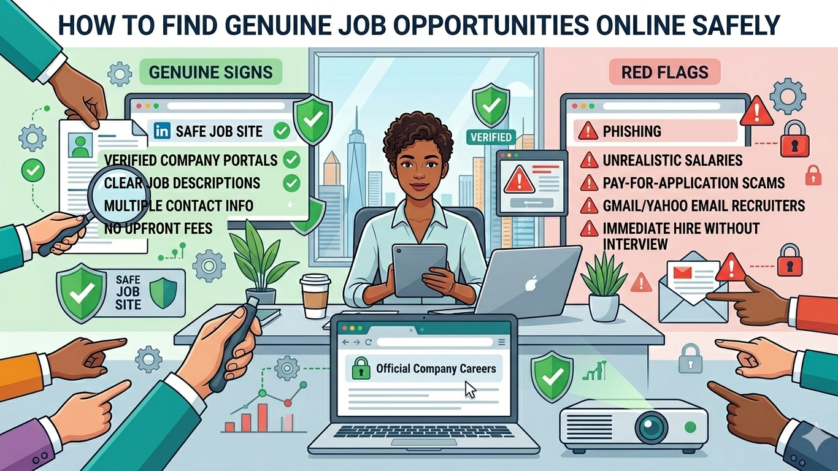
Common Warning Signs of Fake Job Postings
Recognizing red flags can help job seekers avoid fraudulent opportunities. Below are some of the most common warning signs associated with job scams.
Unrealistic Salary Offers
If a company offers extremely high pay for little work or minimal experience, the opportunity may be suspicious. Scammers often use unrealistic salary promises to attract attention quickly.
Vague Job Descriptions
Legitimate companies usually provide clear details about:
- Job responsibilities
- Required qualifications
- Company expectations
- Work schedules
Fake job postings often contain vague or poorly written descriptions that lack specific information.
Missing Company Information
A genuine employer typically includes:
- Company name
- Official website
- Business address
- Contact information
If the job advertisement does not mention company details, candidates should proceed carefully.
Requests for Money
One of the biggest warning signs is when employers ask applicants to pay for:
- Training
- Equipment
- Background checks
- Application fees
Legitimate employers generally do not require upfront payments from candidates.
Unprofessional Communication
Scammers often use:
- Free email addresses
- Poor grammar
- Generic messages
- Unusual communication methods
Official companies usually communicate through professional business email addresses connected to their domain names.
Pressure to Act Quickly
Fraudsters frequently create urgency to pressure applicants into making quick decisions. They may claim:
- Limited vacancies
- Immediate hiring
- Urgent deadlines
Real employers typically provide candidates with reasonable time to respond.
How to Verify a Job Posting
Researching job opportunities carefully is one of the best ways to avoid scams.
Search for the Company Online
Use search engines to verify whether the company exists. Check:
- Official website
- Business registration
- Online presence
- Customer reviews
A legitimate organization usually has a professional digital presence.
Read Employee Reviews
Websites such as Glassdoor and Indeed allow current and former employees to share experiences about companies.
Reading reviews can help candidates understand:
- Workplace culture
- Hiring practices
- Company reputation
- Employee satisfaction
Verify Contact Information
Cross-check phone numbers, email addresses, and website links. Official business communication should come from company domains rather than free email services.
Check Social Media Profiles
Most legitimate businesses maintain active social media accounts. Reviewing these profiles can provide additional confirmation about company authenticity.
Research Recruitment Processes
Understanding how a company normally hires employees can help identify unusual or suspicious hiring practices.
Safe Job Application Practices
Applying safely for jobs online is essential for protecting personal information and avoiding fraud.
Never Share Sensitive Information Too Early
Avoid providing sensitive details such as:
- Bank account information
- Credit card details
- Government identification numbers
This information should only be shared after verifying the employer and receiving official hiring documentation.
Use Trusted Job Platforms
Apply through reputable websites and official company career pages whenever possible. Trusted platforms generally monitor and remove fraudulent postings more actively.
Keep Personal Documents Secure
Store resumes, certificates, and identification documents safely. Only share necessary information with verified employers.
Avoid Suspicious Links
Do not click unknown links or download files from suspicious emails or job postings. These may contain malware or phishing attempts.
Why Networking Helps Find Genuine Jobs
Networking is one of the most effective ways to discover authentic job opportunities. Many legitimate openings are shared through professional connections before being advertised publicly.
Build Professional Relationships
Connecting with industry professionals can provide:
- Career advice
- Job referrals
- Industry updates
- Company recommendations
Attend Industry Events
Workshops, seminars, career fairs, and networking events allow job seekers to meet employers and professionals directly.
Use LinkedIn Professionally
LinkedIn is a valuable platform for:
- Building professional connections
- Following companies
- Discovering job opportunities
- Showcasing skills and achievements
An updated LinkedIn profile increases visibility among recruiters and employers.
Trust Your Instincts During the Job Search
Sometimes instincts can help identify suspicious opportunities. If something feels unusual or unprofessional, candidates should investigate further before proceeding.
Important questions to ask include:
- Does the offer sound too good to be true?
- Is the company difficult to verify?
- Are they requesting money or personal information?
- Is communication professional and clear?
Walking away from suspicious opportunities is always safer than risking personal security or financial loss.
What to Do If You Encounter a Job Scam
If you believe you have found a fraudulent job posting, taking immediate action is important.
Report the Scam
Report suspicious listings to:
- Job websites
- Social media platforms
- Consumer protection authorities
This helps protect other job seekers from becoming victims.
Save Evidence
Keep copies of:
- Emails
- Screenshots
- Messages
- Job descriptions
These records may help during investigations or reporting processes.
Warn Others
Sharing scam experiences with friends, online communities, or professional groups can increase awareness and prevent others from being deceived.
How to Protect Yourself During Online Job Searches
Job seekers should always prioritize personal safety while searching for employment opportunities online.
Important safety tips include:
- Research employers carefully
- Avoid sharing sensitive information
- Use trusted job platforms
- Stay alert for warning signs
- Verify all offers independently
- Trust professional instincts
Developing cautious and informed job search habits can significantly reduce the risk of fraud.
Final Thoughts on Identifying Genuine Job Opportunities
The online job market offers countless opportunities for career growth, but it also contains risks that every job seeker should understand. Fake job postings and employment scams continue to target applicants through professional-looking advertisements and misleading promises.
By learning how to recognize warning signs, verify employers, and apply safely, candidates can protect themselves while improving their chances of finding legitimate employment opportunities.
Successful job searching requires both optimism and caution. Staying informed, conducting proper research, and trusting your instincts can help you navigate the job market more confidently and securely.
With the right approach, job seekers can avoid scams, protect their personal information, and focus on building successful careers through genuine employment opportunities.