
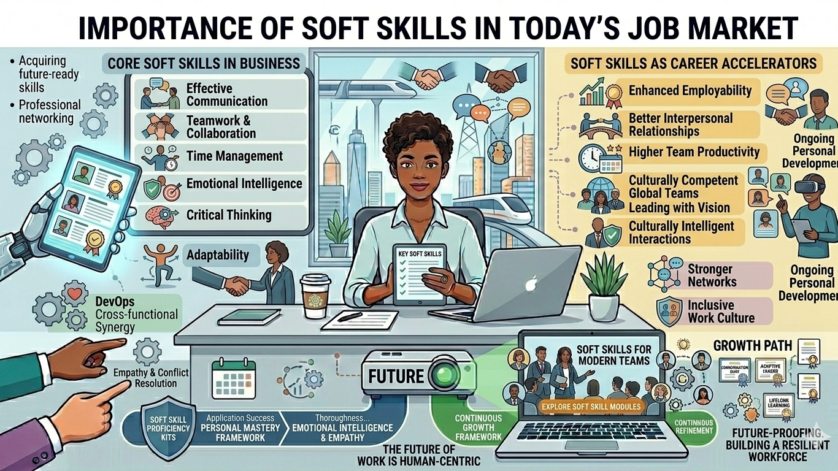
Understanding Soft Skills
Soft skills are a blend of interpersonal abilities, communication techniques, emotional intelligence, and personal attributes that help individuals interact effectively and harmoniously with others. Unlike hard skills, which are technical and measurable abilities learned through education or training, soft skills are more behavior-oriented and influence how people work, communicate, and solve problems.
Examples of soft skills include teamwork, leadership, adaptability, communication, critical thinking, and problem-solving. These skills determine how effectively an individual can collaborate with colleagues, manage workplace challenges, and contribute to a positive organizational culture.
In today’s rapidly evolving job market, employers increasingly prioritize candidates who possess strong soft skills alongside technical expertise. While hard skills may help someone secure a job, soft skills often determine long-term career success and professional growth. Modern workplaces rely heavily on collaboration, flexibility, and communication, making these qualities essential for employees at every level.
The rise of remote work, multicultural teams, and fast-changing business environments has made soft skills even more valuable. Professionals who can adapt quickly, communicate effectively, and work well with others are often more successful in navigating workplace challenges and achieving organizational goals.
The Growing Importance of Soft Skills in Hiring
Over the past decade, employers have shifted their focus toward hiring individuals who demonstrate a balance of technical competence and strong interpersonal abilities. Organizations now recognize that workplace success depends not only on what employees know but also on how they interact with others.
During interviews and recruitment processes, companies increasingly assess soft skills such as communication, teamwork, leadership potential, and adaptability. Employers understand that candidates with excellent soft skills are often more productive, easier to collaborate with, and better equipped to handle workplace challenges.
Behavioral interview questions are commonly used to evaluate these skills. Candidates may be asked how they resolved conflicts, managed deadlines under pressure, or adapted to sudden changes. Such questions help employers understand how applicants behave in real-world situations.
Organizations also place significant emphasis on cultural fit. Employees who align with company values and communicate effectively tend to contribute positively to workplace morale and collaboration. As a result, soft skills have become one of the most important factors influencing hiring decisions.
Teamwork: The Foundation of Workplace Success
Teamwork is among the most valuable soft skills in modern organizations. Most workplaces rely on collaboration between departments, teams, and individuals to achieve business objectives efficiently.
Employees who work well in teams contribute to a productive and supportive environment. Effective teamwork involves listening to others, sharing ideas openly, respecting different perspectives, and working collectively toward common goals.
Strong teamwork can lead to greater creativity and innovation. When people with different experiences and viewpoints collaborate, they often develop more effective solutions to problems. Team-oriented employees also help create a positive workplace atmosphere, improving morale and employee satisfaction.
Additionally, teamwork enhances productivity. Clear communication and coordinated efforts reduce misunderstandings, minimize errors, and ensure projects are completed efficiently. Employers highly value individuals who can collaborate effectively while maintaining professionalism and mutual respect.
Leadership Beyond Job Titles
Leadership is not limited to managers or executives. In today’s workplace, leadership is considered an essential soft skill for employees at all levels. True leadership involves inspiring, guiding, and motivating others toward shared goals.
Employees who demonstrate leadership qualities often take initiative, support teammates, and contribute positively to organizational success. They communicate effectively, remain calm under pressure, and encourage collaboration among colleagues.
Leadership also involves accountability and decision-making. Strong leaders are capable of identifying challenges and finding solutions while motivating others to remain focused and productive. Even employees without formal management roles can display leadership by mentoring colleagues, suggesting improvements, or taking responsibility during difficult situations.
Organizations benefit greatly from employees who possess leadership skills because they contribute to stronger teams, better workplace morale, and improved overall performance.
Adaptability in a Changing Workplace
Adaptability has become one of the most essential soft skills in today’s fast-paced work environment. Businesses constantly face changes in technology, customer expectations, market conditions, and operational strategies. Employees who can quickly adjust to these changes are highly valued by employers.
Adaptable professionals remain open-minded and flexible when encountering new challenges. Rather than resisting change, they embrace opportunities to learn and improve. This mindset helps organizations remain competitive and innovative.
The importance of adaptability became particularly evident during the rise of remote work and digital transformation. Employees who successfully adjusted to new technologies, communication methods, and work structures played a crucial role in maintaining productivity during periods of uncertainty.
Adaptability also supports career growth. Individuals willing to learn new skills and take on different responsibilities are more likely to advance professionally and remain relevant in evolving industries.
Problem-Solving: Turning Challenges into Opportunities
Problem-solving is another highly sought-after soft skill in the modern workplace. Employers value individuals who can analyze situations, identify issues, and develop practical solutions efficiently.
Strong problem-solvers think critically and approach challenges with creativity and confidence. They evaluate different perspectives, consider potential outcomes, and make informed decisions that benefit the organization.
In many workplaces, employees encounter unexpected obstacles such as tight deadlines, technical difficulties, or communication barriers. Professionals with strong problem-solving abilities can remain calm under pressure and develop effective strategies to overcome these issues.
Problem-solving also contributes to innovation. Employees who actively seek solutions often discover new methods for improving productivity, reducing costs, or enhancing customer experiences. As a result, organizations highly appreciate individuals who can transform challenges into opportunities for growth and improvement.
Real-World Examples of Companies Valuing Soft Skills
Many successful organizations prioritize soft skills as part of their recruitment and employee development strategies. Global companies understand that teamwork, communication, leadership, and adaptability directly influence workplace performance and customer satisfaction.
Technology companies, for example, often focus heavily on collaboration and communication during hiring processes. Healthcare organizations value empathy and teamwork because patient care depends on effective interpersonal interactions. Similarly, customer service industries prioritize communication and problem-solving abilities to ensure positive client experiences.
Companies that invest in soft skills training frequently experience improved employee engagement, stronger workplace relationships, and increased productivity. Employees who communicate effectively and collaborate well contribute to healthier workplace cultures and better business outcomes.
The Connection Between Soft Skills and Career Growth
Soft skills play a major role in long-term career success and professional development. While technical skills may help employees secure positions, soft skills often determine promotions, leadership opportunities, and overall workplace influence.
Professionals with strong communication and teamwork abilities are more likely to build positive relationships with colleagues and managers. This can lead to increased trust, stronger professional networks, and greater career opportunities.
Leadership and adaptability also contribute significantly to career advancement. Employees who can manage challenges effectively, motivate others, and remain flexible during change are often viewed as valuable assets within organizations.
Additionally, strong soft skills can improve job satisfaction. Positive workplace relationships, effective communication, and confidence in handling challenges create a more fulfilling and productive work environment.
Practical Ways to Improve Soft Skill
Developing soft skills requires consistent effort and self-awareness. Fortunately, these abilities can be strengthened through practice and experience.
One effective way to improve communication skills is by actively participating in discussions, presentations, and group activities. Listening carefully to others and expressing ideas clearly can significantly enhance interpersonal communication.
Teamwork skills can be developed by collaborating on projects and learning to respect different perspectives. Taking initiative in workplace activities can also help strengthen leadership abilities.
Adaptability improves when individuals remain open to learning new skills and embracing unfamiliar situations. Similarly, problem-solving skills can be enhanced by practicing critical thinking and approaching challenges with a solution-focused mindset.
Seeking feedback from colleagues and supervisors is another valuable strategy. Constructive feedback helps individuals identify areas for improvement and continue developing professionally.
Conclusion
Soft skills have become an essential component of workplace success in today’s professional world. Employers increasingly seek individuals who can communicate effectively, collaborate with teams, adapt to change, demonstrate leadership, and solve problems efficiently.
As industries continue to evolve, professionals who invest in developing their soft skills will position themselves for long-term success and career growth. While technical expertise remains important, the ability to work well with others and navigate workplace challenges is what truly distinguishes exceptional employees.
By continuously improving soft skills through practice, collaboration, and learning, individuals can enhance their employability, strengthen workplace relationships, and build rewarding professional careers in an increasingly competitive job market.