
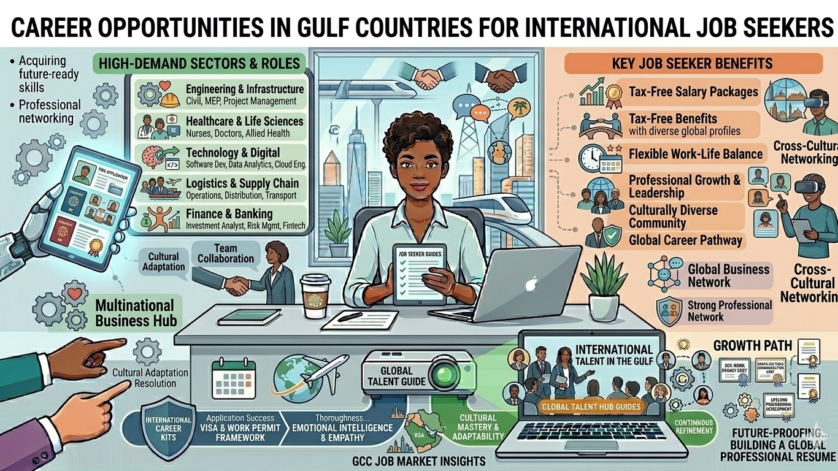
Introduction to Job Opportunities in the Gulf
The Gulf region has become one of the world’s most attractive destinations for professionals seeking career growth, financial stability, and international work experience. Countries such as the United Arab Emirates (UAE), Saudi Arabia, Qatar, Kuwait, Oman, and Bahrain continue to attract skilled workers from around the globe due to their rapidly expanding economies and strong demand for talent.
Over the past two decades, Gulf countries have transformed into major global business hubs. Massive investments in infrastructure, tourism, healthcare, technology, finance, and energy have created thousands of employment opportunities for local and international professionals alike. Cities like Dubai, Abu Dhabi, Doha, and Riyadh are now recognized as centers for innovation, business development, and global trade.
One of the biggest attractions of working in Gulf countries is the potential for higher salaries and tax-free income in many regions. Combined with modern infrastructure, multicultural workplaces, and excellent career advancement opportunities, the Gulf continues to be a preferred destination for job seekers from different professional backgrounds.
Why Gulf Countries Attract International Professionals
Gulf countries offer numerous advantages that make them appealing to expatriates and skilled workers. One major factor is economic growth. Governments across the region are actively diversifying their economies beyond oil dependency, leading to increased investment in sectors such as tourism, renewable energy, information technology, logistics, and healthcare.
Another important attraction is the multicultural environment. Professionals working in Gulf countries often collaborate with people from diverse nationalities and cultures. This international exposure helps individuals broaden their professional networks, improve communication skills, and gain valuable global experience.
The high standard of living is another reason many professionals choose Gulf countries. Modern transportation systems, advanced healthcare facilities, luxury lifestyles, and excellent infrastructure contribute to comfortable living conditions for expatriates and their families.
Furthermore, Gulf governments continue to launch ambitious development plans aimed at attracting foreign investment and skilled talent. Projects such as Saudi Arabia’s Vision 2030 and the UAE’s innovation-focused initiatives are creating long-term career opportunities in various industries.
Popular Industries in Gulf Countries
Several industries in the Gulf region continue to experience rapid growth and offer excellent career opportunities for professionals across different skill levels.
Oil and Gas Industry
The oil and gas sector remains one of the largest employers in Gulf countries. Nations such as Saudi Arabia, the UAE, and Qatar possess some of the world’s largest petroleum reserves, creating continuous demand for engineers, technicians, project managers, and safety specialists.
This industry offers highly competitive salaries and benefits, making it attractive to professionals with expertise in energy production, drilling operations, and industrial engineering.
Construction and Infrastructure
The Gulf region is known for its massive construction and infrastructure projects. Skyscrapers, transportation systems, airports, smart cities, and tourism developments have created thousands of jobs in civil engineering, architecture, project management, and construction supervision.
Countries like Saudi Arabia and the UAE continue to invest heavily in mega-projects, increasing demand for skilled workers in the construction sector.
Hospitality and Tourism
Tourism plays a significant role in Gulf economies, especially in Dubai, Abu Dhabi, and Qatar. Luxury hotels, resorts, restaurants, and entertainment venues create employment opportunities in hospitality management, customer service, event planning, and culinary arts.
International events and tourism campaigns further contribute to the growth of this sector, making it ideal for professionals seeking careers in travel and hospitality.
Healthcare
Healthcare is another rapidly expanding industry in Gulf countries. Growing populations and government investments in medical infrastructure have increased demand for doctors, nurses, medical technicians, healthcare administrators, and specialists.
Many healthcare institutions in the Gulf offer modern facilities, attractive compensation packages, and opportunities for professional development.
Information Technology and Technology Services
Technology and digital transformation are reshaping Gulf economies. Companies are actively seeking software developers, cybersecurity specialists, data analysts, cloud engineers, and IT support professionals to support digital innovation initiatives.
The technology sector is expected to continue growing as Gulf countries embrace smart technologies, artificial intelligence, and digital services.
Understanding Work Culture in the Gulf
The workplace culture in Gulf countries reflects a combination of traditional values and modern business practices. Understanding cultural expectations is essential for professionals planning to work in the region.
Respect and professionalism are highly valued in Gulf workplaces. Employees are generally expected to demonstrate politeness, punctuality, and respect for organizational hierarchy. Addressing colleagues formally and maintaining professional etiquette can positively influence workplace relationships.
Communication styles may differ from Western work environments. In many Gulf workplaces, indirect communication and diplomacy are preferred over confrontation. Building trust and maintaining positive professional relationships are considered extremely important.
Religious and cultural customs also influence workplace practices. Professionals should remain respectful of local traditions, prayer times, dress codes, and public behavior. Demonstrating cultural awareness helps expatriates integrate more smoothly into the workplace and society.
Additionally, teamwork and relationship-building play a significant role in professional success within Gulf organizations. Networking and personal connections often contribute greatly to career advancement opportunities.
Visa Basics and Employment Requirements
Understanding visa procedures is essential for anyone considering employment in Gulf countries. Most expatriates require a work visa sponsored by their employer to legally work and reside in the region.
The employment process typically begins with a job offer from a Gulf-based company. The employer then initiates the visa application and sponsorship procedures. Required documents often include:
- Valid passport
- Educational certificates
- Professional qualifications
- Passport-sized photographs
- Medical fitness reports
- Employment contract
The sponsorship system, commonly referred to as the “Kafala” system in some Gulf countries, links an employee’s residency status to their employer. Because of this, job seekers should carefully review employment contracts and research companies before accepting offers.
Visa regulations may vary between countries, so staying informed about local immigration rules is important for avoiding legal complications.
Effective Job Search Strategies for the Gulf Market
Finding employment in Gulf countries requires strategic planning and preparation. Several methods can improve a candidate’s chances of securing job opportunities in the region.
Use Gulf-Specific Job Portals
Online job platforms focused on Gulf employment markets are valuable resources for job seekers. Websites dedicated to Gulf jobs regularly post openings across industries such as construction, healthcare, hospitality, IT, and finance.
Keeping profiles updated and tailoring resumes to match job descriptions can significantly improve visibility to recruiters.
Build Professional Networks
Networking is extremely important in Gulf countries. Attending industry events, connecting with professionals on LinkedIn, and participating in online communities can help candidates discover job openings and gain insights into local industries.
Personal referrals and professional recommendations often play a major role in hiring decisions.
Work with Recruitment Agencies
Many companies in Gulf countries rely on recruitment agencies to identify qualified candidates. Partnering with reputable recruitment firms can provide access to exclusive opportunities and professional guidance throughout the hiring process.
Customize Your Resume
Employers in the Gulf often prefer resumes that clearly highlight skills, certifications, international experience, and measurable achievements. Candidates should tailor applications specifically to each role while emphasizing adaptability and cultural awareness.
Salary Expectations and Employee Benefits
One of the most attractive aspects of working in Gulf countries is the compensation package. Salaries are generally competitive, especially in sectors such as oil and gas, engineering, healthcare, and information technology.
In addition to base salaries, many employers provide benefits such as:
- Tax-free income
- Free or subsidized housing
- Transportation allowances
- Medical insurance
- Annual flight tickets
- End-of-service gratuity
- Paid leave
These benefits significantly improve overall financial stability and quality of life for expatriates working in the region.
However, professionals should also consider the cost of living, which can vary greatly depending on the country and city. Major cities like Dubai and Doha may have higher housing and lifestyle expenses compared to smaller regions.
Challenges Faced by Expatriates
While Gulf countries offer numerous opportunities, expatriates may also face certain challenges. Adjusting to a new culture, workplace environment, and legal system can take time.
Cultural differences may create communication barriers initially. Understanding local customs and maintaining respect for traditions can help expatriates adapt more comfortably.
Another challenge is the high cost of living in some cities, especially regarding housing and education for families. Effective financial planning is important for managing expenses successfully.
Additionally, adapting to workplace hierarchies and different management styles may require patience and flexibility. Professionals who demonstrate adaptability and openness to learning often integrate more successfully into Gulf work environments.
Success Stories of Professionals in the Gulf
Many professionals have successfully transformed their careers by working in Gulf countries. Engineers, healthcare workers, IT specialists, hospitality professionals, and entrepreneurs have all found opportunities for growth and advancement in the region.
Expatriates often gain valuable international experience, expand their professional networks, and achieve financial goals that may have been difficult elsewhere. The multicultural nature of Gulf workplaces also helps individuals develop stronger communication and leadership skills.
These success stories demonstrate that with proper preparation, adaptability, and determination, professionals can build highly rewarding careers in Gulf countries.
Conclusion
The Gulf region continues to offer outstanding job opportunities for professionals seeking career growth, financial stability, and international exposure. Rapid economic development, expanding industries, and ambitious government initiatives have created a dynamic employment landscape across countries such as the UAE, Saudi Arabia, and Qatar.
From oil and gas to healthcare, technology, construction, and hospitality, Gulf countries provide opportunities for individuals from various professional backgrounds. While adapting to a new culture and work environment may present challenges, the potential rewards are significant.
By understanding local work culture, preparing effectively for the job market, and remaining adaptable, professionals can unlock exciting career opportunities and build successful futures in the Gulf region.