
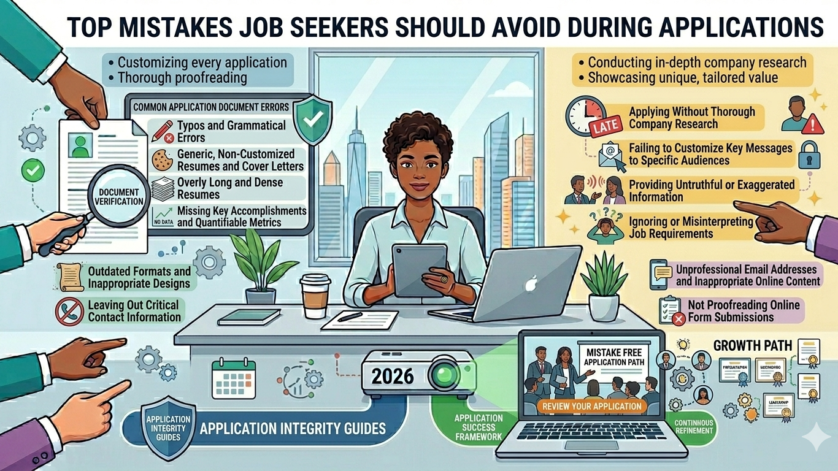
Introduction: The Importance of a Flawless Job Application
In today’s highly competitive job market, a well-crafted job application is more than just a formality—it is one of the most important factors in securing your dream job. Your application serves as the first impression you make on potential employers, showcasing your qualifications, professionalism, and suitability for the role. A polished and error-free application can help you stand out among hundreds of candidates competing for the same opportunity.
Employers often spend only a few seconds reviewing each application. This means even small mistakes can negatively impact your chances of moving forward in the hiring process. Attention to detail, professionalism, and customization are essential elements of a successful job application.
This article explores some of the most common job application mistakes candidates make and provides practical advice to help job seekers avoid them. By understanding these pitfalls and taking proactive steps to correct them, applicants can improve their chances of securing interviews and ultimately landing the right job.
Mistake 1: Neglecting Resume Standards
One of the most common job application mistakes is submitting a poorly formatted or outdated resume. Since your resume is often the first document employers review, it should present information in a clear, organized, and professional manner.
Formatting inconsistencies, difficult-to-read fonts, and cluttered layouts can make a negative impression. Job seekers should use clean formatting with consistent headings, bullet points, and spacing. A professional resume should be easy to scan quickly while highlighting key achievements and qualifications.
Spelling and grammar mistakes are another major issue. Even minor errors can suggest a lack of attention to detail. Carefully proofreading your resume and using grammar-checking tools can help eliminate mistakes before submission.
Additionally, using a generic resume for every application can reduce effectiveness. Tailoring your resume to match the job description is essential. Including relevant keywords and emphasizing experiences that align with the role can significantly improve your chances of getting noticed by hiring managers and applicant tracking systems (ATS).
Mistake 2: Poor Interview Preparation
Many candidates underestimate the importance of interview preparation. Walking into an interview without proper research and practice can greatly reduce your chances of success.
Before attending an interview, applicants should thoroughly research the company, including its mission, services, culture, and recent developments. Understanding the organization allows candidates to answer questions more effectively and demonstrate genuine interest in the position.
Practicing responses to common interview questions is also crucial. Questions about strengths, weaknesses, teamwork, leadership, and problem-solving abilities are frequently asked during interviews. Rehearsing thoughtful responses can help candidates communicate more confidently and professionally.
Preparing questions for the interviewer is equally important. Asking insightful questions about company culture, growth opportunities, or job responsibilities shows enthusiasm and engagement. Well-prepared candidates leave stronger impressions and are often viewed as more serious and motivated professionals.
Mistake 3: Unprofessional Communication in Emails
Professional communication plays a critical role throughout the hiring process. Many job seekers unintentionally harm their applications through poorly written or unprofessional emails.
Using informal language, slang, or unclear subject lines can create a negative impression. Emails should maintain a professional tone, include clear subject lines, and address recipients respectfully. For example, a subject line such as “Application for Sales Executive Position – John Smith” is more effective than a vague message.
Proofreading emails before sending is also essential. Spelling mistakes, grammar issues, or incomplete sentences can make candidates appear careless or unprepared. Taking a few extra minutes to review communication can significantly improve professionalism.
Additionally, responding promptly and politely to employer messages demonstrates reliability and good communication skills, both of which are highly valued in the workplace.
Mistake 4: Failing to Follow Up After Interviews
One overlooked but highly important step in the job application process is sending a follow-up email after an interview. Candidates who fail to follow up miss an opportunity to reinforce their interest in the position and leave a lasting positive impression.
A follow-up email should typically be sent within 24 to 48 hours after the interview. The message should thank the interviewer for their time, express appreciation for the opportunity, and briefly reiterate enthusiasm for the role.
Personalizing the follow-up by mentioning specific topics discussed during the interview can help candidates stand out. This demonstrates attentiveness and professionalism while keeping the applicant fresh in the interviewer’s mind.
Following up professionally can often make a difference between candidates with similar qualifications.
Mistake 5: Ignoring Online Application Details
Online applications require careful attention to detail, yet many candidates rush through them without fully reviewing instructions or requirements.
Failing to read job descriptions carefully can lead applicants to overlook important qualifications or submission requirements. Employers often specify exactly what they expect from applicants, including resume formats, supporting documents, and application deadlines.
Another common issue is submitting incomplete applications. Missing attachments, unanswered questions, or incorrectly uploaded files can result in automatic rejection. Taking time to double-check every section before submission is essential.
Candidates should also tailor responses to fit the specific role rather than copying generic answers across multiple applications. Personalized applications demonstrate genuine interest and effort, increasing the likelihood of being shortlisted.
Mistake 6: Overemphasizing Skills Without Real Examples
Many candidates list skills on their resumes or during interviews without providing real examples to support them. While mentioning skills such as leadership, communication, or problem-solving is important, employers also want evidence of how those skills were applied successfully.
Using real-life examples and measurable achievements can strengthen credibility. Instead of simply stating “excellent leadership skills,” candidates should describe situations where they successfully led a team, completed a project, or solved a challenging problem.
The STAR method—Situation, Task, Action, and Result—is an effective approach for presenting examples clearly and professionally. This method helps candidates provide structured and impactful answers during interviews and on resumes.
Quantifying achievements whenever possible also makes applications stronger. Statements such as “increased sales by 25%” or “managed a team of 10 employees” provide concrete evidence of success.
Mistake 7: Being Unaware of Social Media Impact
In today’s digital world, employers frequently review candidates’ social media profiles before making hiring decisions. An unprofessional online presence can negatively affect job opportunities.
Inappropriate posts, offensive comments, or unprofessional photos may create negative impressions and damage credibility. Job seekers should regularly review their social media accounts and remove content that may appear unprofessional to employers.
Maintaining a strong professional presence on platforms like LinkedIn can enhance career opportunities. Updating profiles with relevant experience, certifications, and achievements helps showcase professionalism and industry involvement.
Sharing industry-related content, networking with professionals, and participating in professional discussions can also strengthen personal branding and improve visibility among recruiters.
Conclusion: Strategies for a Successful Job Application
Avoiding common job application mistakes can significantly improve your chances of landing interviews and securing your dream job. Attention to detail, professionalism, preparation, and personalization are key elements of a successful application process.
Candidates should focus on creating tailored resumes, preparing thoroughly for interviews, communicating professionally, and maintaining a strong online presence. Following up after interviews and providing real examples of skills can further strengthen applications and leave positive impressions on employers.
The job search process can be competitive and challenging, but continuous improvement and careful preparation can make a major difference. By learning from common mistakes and applying effective strategies, job seekers can position themselves for long-term career success and confidently pursue new opportunities.